
Case study
A Bitcoin wallet locked for years: MultiBit Classic password recovery
MultiBit Classic · Wallet created 2013
Short answer
MultiBit Classic encrypts its wallet with a key derived through scrypt, which is deliberately slow and memory-hard — so raw hardware barely helps. What made this recovery possible was a forgotten notebook that cut the candidate list from astronomical to testable.
- Wallet
- MultiBit Classic
- Era / version
- Wallet created 2013
- Access problem
- Password to an encrypted MultiBit Classic wallet could not be remembered; every guessed variation failed.
- Material remaining
- Original wallet file from 2013; extensive but incomplete password hints; an overlooked notebook with five password variations on the same root.
- Technical challenge
- Discontinued software with no official support, old encryption format, and a 15-character password built from capitals, symbols and random characters.
- Assessment
- Realistic but not guaranteed; the wallet file and hint material justified attempting recovery under a written agreement.
- Recovery approach
- Analysis of the wallet format and the client's password-construction habits, then candidate testing against the scrypt-derived key in a controlled offline environment. No sensitive material passed through ordinary contact channels.
- Outcome
- Access restored. The wallet held Bitcoin worth well into six figures at the time.
- Timeframe
- Contacted December 2023; recovery completed spring 2024.
- Anonymisation
- Partial - the client’s first name and country are used with approval; no wallet details or keys are published.
- Author
- Robbert Bink
- Date
- 2025-08-19
The case
An email arrived in December 2023: a client locked out of a MultiBit Classic wallet created in 2013, after years of failed password attempts. MultiBit had been discontinued in July 2017, so there was no vendor support and no official software to fall back on. What remained was the original wallet file — and the client's memory of how passwords from that era were built: words, years, habits.
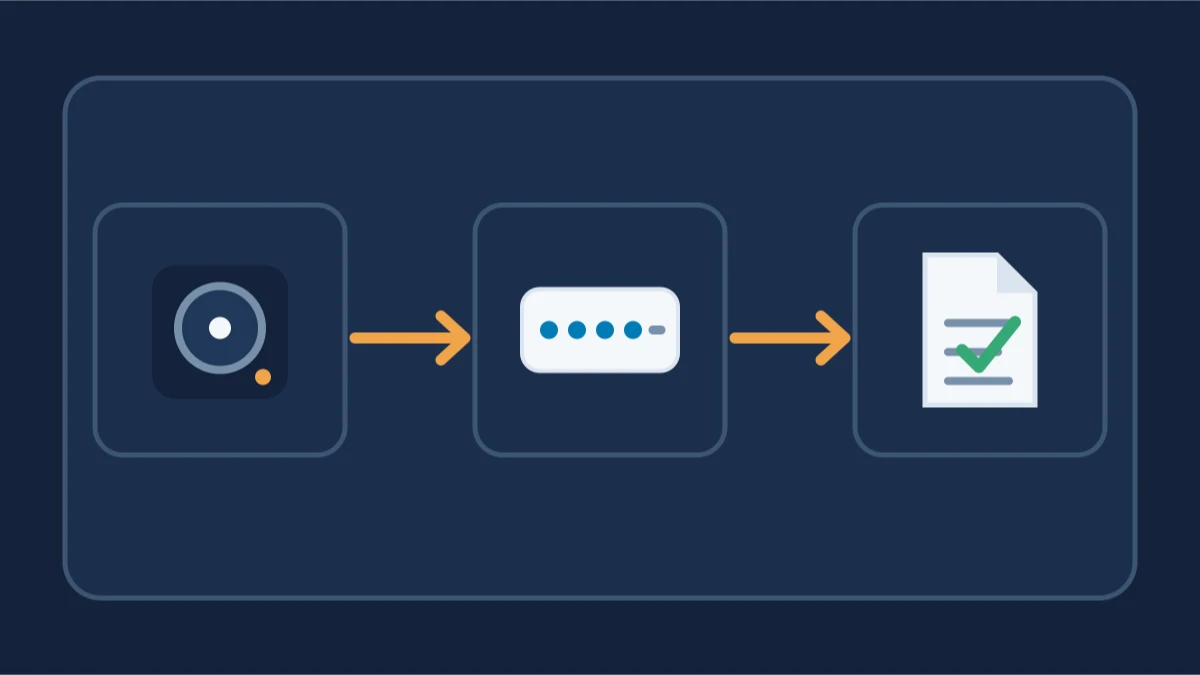
Why old wallets are not automatically easier
There is a common assumption that a wallet from 2013 must use weak, quickly-broken encryption. That is not what we found, and it is worth correcting.
MultiBit Classic was built on bitcoinj, which does not hash your password and use it directly. It runs the password through scrypt to derive the AES key. Scrypt is a memory-hard function, designed specifically to be expensive to attack in parallel — the bitcoinj documentation describes it plainly as "harder to brute force at high speed than alternative algorithms," and recommends parameters tuned so that turning a password into a key takes a noticeable amount of time on the user's own machine.
The practical consequence is the opposite of what people expect: throwing hardware at a MultiBit wallet does not work well. Where a fast hash lets a GPU test billions of candidates per second, scrypt's memory requirement collapses that advantage. If each guess costs a meaningful fraction of a second, then a million candidates is not a coffee break — it is weeks.
So the case was never going to be won on equipment. It had to be won on the candidate list.
What actually solved it
The password was roughly fifteen characters, mixing capitals, symbols and apparently random material — blind guessing against that space was never going to work.
The client's memory changed the arithmetic. Passwords are rarely random even when they look it — they are built from roots, then decorated. We worked through the way this client constructed passwords in that period: which words, which substitutions, which years, where capitals and symbols tended to land.
Then an overlooked notebook turned up, holding five password variations built on the same root — the moment the case turned. Five real examples of someone's password habits are worth more than any amount of hardware, because they convert an open-ended search into a structured one: a known root, a known decoration style, and a bounded set of variations to test around it.
Candidate generation ran offline against a copy of the file, under a written agreement. Access was restored to a wallet holding Bitcoin worth well into six figures at the time, though the client had been locked out long before it reached that value.
What would have made this case impossible
- No wallet file. Password recovery needs something to test against. A remembered password with no file is not a case.
- A file that had been "repaired." Well-meant attempts to fix or convert an old wallet can destroy the very structure recovery depends on.
What this means if you are in the same position
Look for the paper before you look for a tool. Old notebooks, password managers you stopped using, a drawer of sticky notes, the back page of a diary — anything showing how you used to build passwords is more valuable than the guesses you can still remember. Copy the wallet file somewhere safe and do not experiment on the original.
An old wallet file is enough to request an assessment; reliable remembered details can make the search more focused. See the legacy wallet timeline and the password recovery reference. The full story is published as a recovery story: a Bitcoin wallet locked for years.
"I cannot believe it, you actually did it."- anonymised client, with approval
Sources
Start your recovery
The assessment is free and needs no sensitive material. Describe what you still have and we will review whether recovery is realistic. You only pay if the recovery succeeds.