Service
Damaged & Corrupted Wallet Data Recovery
Damaged or deleted wallet files? Stop using the drive to avoid overwriting data. Recovery depends on the wallet data that remains readable.
Quick answers
What should I do first with a damaged device?
Stop using it. Do not reinstall software, format storage, reset the device or keep powering up a failing drive. Further writes or repeated attempts can reduce what remains recoverable.
Do you work on the only original?
No. Where technically possible, the device or storage is imaged first and recovery work is performed on a controlled copy. The original is preserved as found.
Can every deleted or corrupted wallet file be recovered?
No. The outcome depends on whether data has been overwritten, the physical condition of the storage and how much of the wallet file remains readable. The assessment establishes whether a safe route exists.
Wallet files get corrupted, deleted, or stranded on drives that stop working. In many cases the data still exists physically and can be recovered - if nothing has overwritten it.
What we cover
Corrupted wallet.dat and keystore files, deleted wallet files, failing or dead hard drives, damaged phones and laptops, partial backups, and wallets lost on old computers.
The most important rule
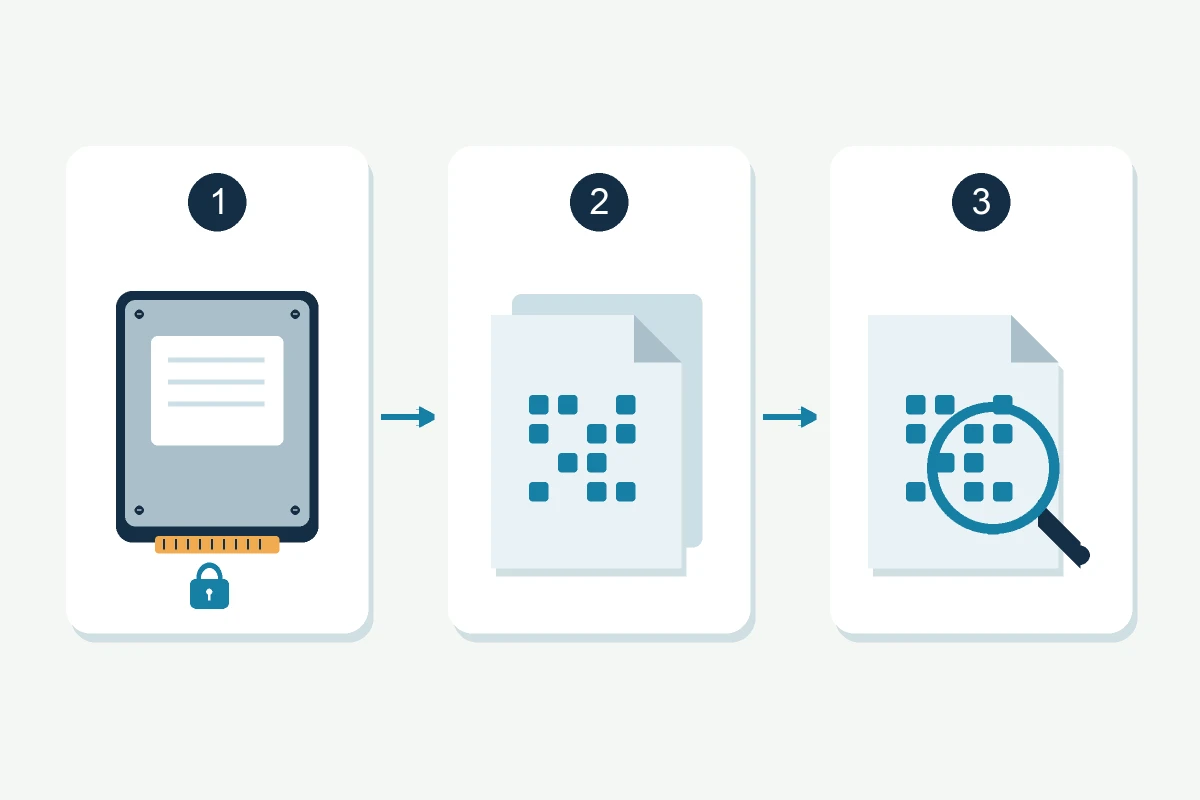
Stop using the device or drive immediately. Every write can overwrite the very data we would recover. We start by making a forensic image and working only on copies.
What is recoverable
Deleted files that weren't overwritten, corrupted files with readable parts, and data on failing drives are often recoverable with the right approach. Overwritten data, and drives that were securely wiped, aren't - that's irreversible by design.
How it works
Assessment, then a written agreement covering data handling and security. Recovery happens on imaged copies in a controlled environment; after the wallet file is back, password recovery is a separate, clearly agreed step.
The honest boundary
Water damage, age and overwriting reduce the odds case by case. We assess the actual material and give you a straight answer before any commitment.
Why evidence handling matters
Every write to a drive can overwrite deleted or damaged wallet data. That is why the first instruction is always the same: stop using the device. A forensic image preserves the current state, and all analysis happens on copies - the original stays untouched as evidence, which also matters if the case ever needs to be documented for an estate or a legal process.
What we do, step by step
- Assessment: what the drive or file is, what state it is in, and what a realistic outcome looks like.
- Evidence handling: forensic imaging and integrity hashes, under a written agreement.
- Data recovery: deleted-file recovery, partial-file reconstruction or drive imaging, on copies.
- Wallet recovery: once the file is back, password or format work follows as a separate agreed step.
What to do right now
Unplug the drive, note where and how the file was stored, and do not run repair software, formatting or reinstalls. If the device is making noise or failing, stop using it entirely - the difference between recoverable and gone is often how much was written after the failure.