
Recovery route
Zero Access Recovery Protocol
A client-controlled recovery route for high-value and confidential cases, with working arrangements agreed in advance.
Most recoveries do not need this. Our standard process is already non-custodial: we restore access, and you move your own funds. For a smaller group of cases — substantial holdings, estates with several beneficiaries, institutional wallets, or clients for whom confidentiality is itself the risk — a stricter arrangement is possible.
What this route is, and is not
A precise definition, and the limits that come with it.
What zero access means here
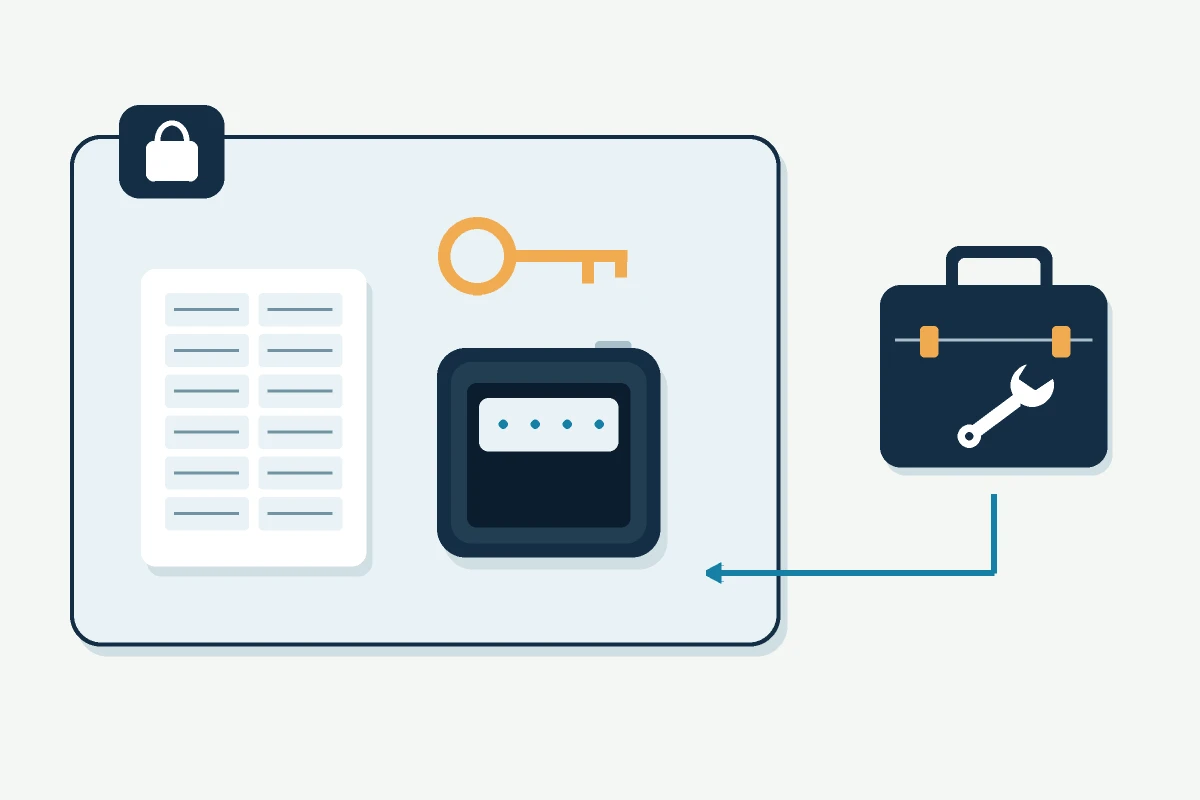
It means one specific thing: for the duration of the engagement, no credential that would open your wallet is transmitted to us or stored by us. The material stays in your hands, or in the hands of the professional acting for you, and the recovery work is carried out there.
That is a statement about what we hold, not a promise about what we would choose to do with it. It sits on top of commitments that already apply to every case: we never take custody of assets, we cannot initiate a transaction on your behalf, and you perform the final transfer yourself. The name refers to that credential boundary, not to the cryptographic zero-knowledge technique - the two are unrelated.
What it does not mean
It is not a guarantee of recovery, and it does not make the standard route unsafe. Verification, written scope and handling standards are identical either way. What changes is where the material is processed and what reaches us.
Planning the work
The working arrangements and location, agreed with you.
Zero Access is arranged around your case. During the free, confidential first assessment, we discuss the recovery method, the material that remains and the practical setup.
Before work starts, we agree:
- The equipment and working environment needed for the recovery.
- Who will be present and how the material stays under your control or that of your authorized representative.
- How access will be handed back, with you opening the wallet and moving the assets yourself.
These arrangements are recorded in the written scope.
Where the work happens
The route changes where the work happens, not the standard applied to it. Which of these is workable depends on the case, the equipment involved and the location; it is settled in writing before anything begins.
At your own premises
By prior arrangement, meetings, verification, material handover and — where the location and setup permit — the technical work itself can take place at your home or office.
At your lawyer's, notary's or adviser's office
The engagement can run at the office of the professional acting for you, with that professional present throughout.
At another agreed location
Any other location agreed in advance, including our Amsterdam office when you prefer face-to-face handling.
How an engagement runs
From a confidential first contact to a client-controlled handover.
- 1
Confidential first contact
Your role and a general description of the situation. No wallet material, no files, no phrases. An NDA can be signed before substantive details are discussed.
- 2
Technical planning
We establish the recovery method and the setup needed to carry out the work while keeping wallet access under your control.
- 3
Ownership and authority verification
Identity and evidence of ownership, and legal authority for heirs, executors and authorized representatives, with risk-based KYC and AML checks.
- 4
Written scope
The environment, who attends, which material is used, the reporting and the fee are agreed in writing before any work begins.
- 5
Supervised recovery
The work is carried out in the agreed environment. Your lawyer, notary, executor, security officer or another authorized representative may be present throughout.
- 6
Client-controlled handover and closure
You open the wallet and move the funds yourself. The case is closed with confirmation, and material is returned or deleted as agreed.
Advisers, confidentiality and fees
Who else can be involved, and the commitments that do not change.
For lawyers, notaries and other professionals
You can instruct us, attend the engagement and receive the agreed reporting. We provide the technical wallet-access work; you retain the client relationship and responsibility for legal, tax and succession advice.
Roles are fixed in writing before material moves: who instructs us, who has authority over the wallet, who may provide material, who receives updates, and who controls the final handover. See the route that fits your practice — lawyers and notaries, family offices and advisers, estates and executors or businesses.
Confidentiality, fees and handling
The commitments that apply to every case apply here too: no wallet secrets at first contact, access limited to the named specialists assigned to your case, only the material reasonably necessary requested, work on copies where copies are used at all, and deletion after closure. They are set out in full on our security and data handling page.
Fees follow the same principle as every other case: a free first assessment, a success fee agreed in writing, and no upfront payment for the standard service. For higher-value wallets the percentage is reduced, so the fee stays proportionate to the work rather than to the balance. Where an engagement calls for attendance at a particular location, the arrangements and any associated cost are stated in the written scope before you commit to anything. See pricing.
Questions about this route
Straight answers before you get in touch.
Is this handled by a different team?
No. The same named specialists, the same written agreement and the same non-custodial handover apply. What differs is where the technical work is carried out and what material reaches us.
Does this route cost more?
No - the fee principle above applies to this route too, with any location cost for attendance fixed in the written scope beforehand.
Can my lawyer or notary be present throughout?
Yes. A lawyer, notary, executor, security officer or another authorized representative can attend the engagement and receive the agreed reporting, with the roles recorded in writing beforehand.
Do you ever see my recovery phrase?
In a Zero Access engagement, no — that is what this route is for. In every case, we apply a minimal-access principle: only the material reasonably necessary for the agreed work is requested, and when a partial approach is possible the full phrase is not asked for.
Is this a zero-knowledge system?
No. This is an arrangement about where recovery work is performed and which material reaches us, not the cryptographic zero-knowledge technique.
Do you take custody of the assets at any point?
No, on any route. We restore access; you open the wallet and move the funds yourself. We cannot initiate a transaction on your behalf.
How do I start a confidential conversation?
Send your name, your role and a general description of the situation — nothing else. If you would prefer an NDA before substantive details are discussed, ask for one in that first message.
Confidential enquiry
Start with a description, not your material.
Your name, your role and a general description of the situation are enough for the first conversation. An NDA can be signed before substantive details are discussed.