
Knowledge base
Wallet vs Wallet File vs Keys: What Actually Holds Your Crypto
The app is not the wallet, and the file is not the coins. This foundation page separates wallet, wallet file, keys and address - and explains which material unlocks what.
Short answer
A crypto wallet does not store coins: the coins live on the blockchain and the wallet holds the keys that control them. Most recovery confusion comes from mixing up the wallet, the wallet file, the keys and the address — they are four different things.
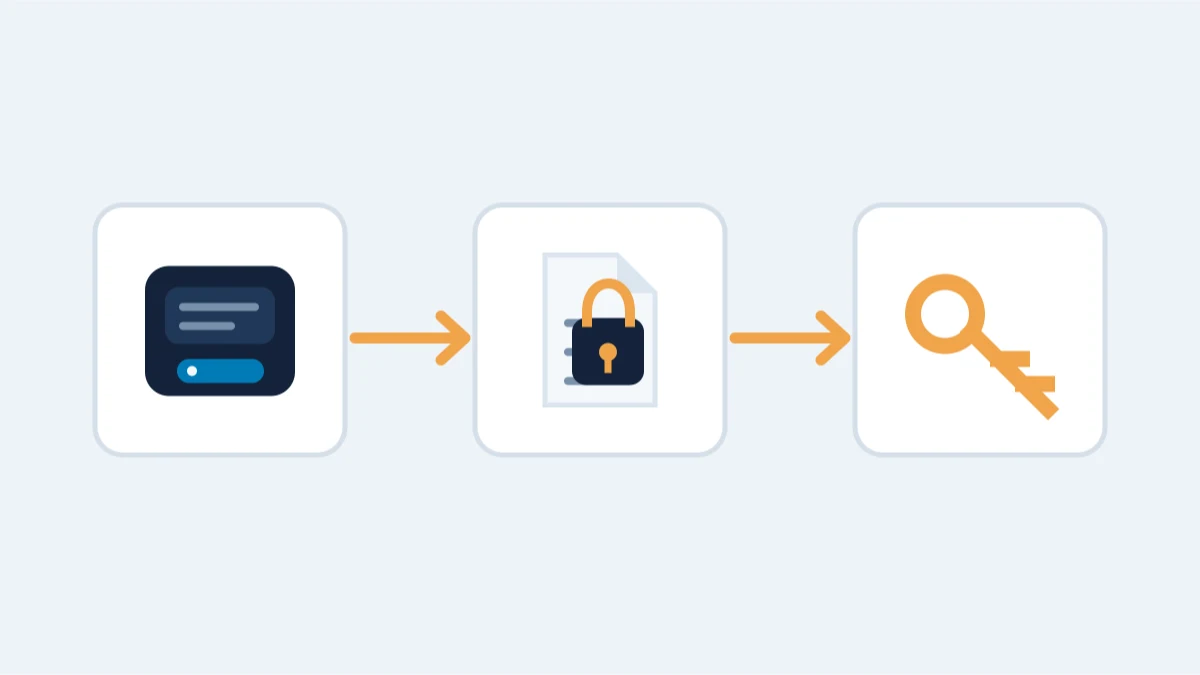
A crypto wallet does not store coins. The coins live on the blockchain; a wallet holds the keys that control them. Most recovery confusion comes from mixing up four different things, so this page separates them.
The four things
- The wallet (app or device): software or hardware that manages keys. Reinstalling the app does not bring keys back.
- The keys: the private keys that let you spend. The seed phrase (or an exported key) is the recoverable form of the keys.
- The wallet file: a file such as wallet.dat, an Electrum wallet or a keystore JSON that stores keys on disk, usually encrypted with a password.
- The address: the public destination you share to receive funds. An address can show a balance but can never restore access.
Custodial vs non-custodial
- Custodial (an exchange or hosted account): the provider holds the keys. Access runs through their support flow, identity checks and resets.
- Non-custodial (MetaMask, Electrum, Ledger, a wallet.dat file): you hold the keys. Nobody has a spare copy, so recovery depends entirely on the material you still have.
Which material unlocks what
A seed phrase restores the whole wallet in compatible software, provided you also have the right derivation path. A wallet file restores access with its password — without the password, it becomes the target of a password search instead. A private key or WIF restores access to the addresses controlled by that key, using the original network and address type, through an import or a sweep, and a hardware wallet's device holds the keys but is not itself the backup; the seed is. Nothing - a completely lost seed with no file, key or backup cannot be rebuilt, by anyone.
What this means for recovery
Recovery is wallet-level, not coin-level: it restores access to keys, regardless of which coins the wallet can hold. What matters is the format of the file or backup and the material you still have, not the app icon you remember. The format reference identifies the file; the feasibility matrix maps the material to an honest outcome.
Still locked out?
The first assessment is free, and it asks for no wallet secrets. Describe what you still have — a file, a phrase, a device, or what you remember — and we’ll tell you whether recovery is realistic. You only pay if the recovery succeeds.