
Blog
Ledger Wallet Hacked? How It Happens and What to Do

In short
A reported “Ledger hack” can mean exposed recovery words, a malicious transaction approval, compromised customer data or a hardware problem. These are different incidents: Ledger’s 2020 customer-data breach and the 2023 Connect Kit attack did not amount to extracting private keys from Ledger devices.
First establish whether transactions actually left your accounts. An empty display alone does not prove theft. If your recovery phrase was exposed, use trusted equipment to protect remaining assets in a fresh wallet; a new PIN does not replace compromised keys. Preserve transaction hashes and suspicious messages, and report theft to the appropriate authorities. Crypto Recovers assesses lost access to your own wallet, but does not handle stolen-fund recovery or reverse confirmed transactions.
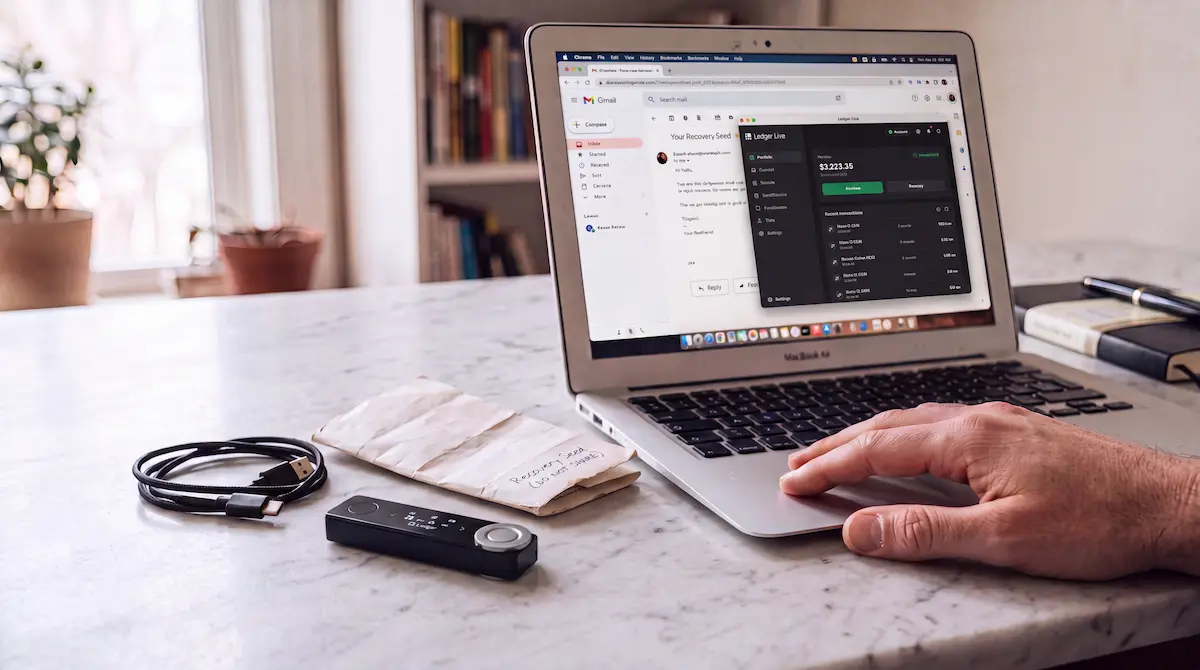
Funds have disappeared, or you have read about a 'Ledger hack' and are not sure what it means for you. Both have the same starting point. The distinction between documented incidents, how hardware wallets actually get compromised, and what your options are now determines what you should do next.
Can a Ledger hardware wallet be hacked?
Not remotely, and not in the way most people imagine. A Ledger device stores private keys in a Secure Element chip: a tamper-resistant component certified to Common Criteria EAL5+ that is designed not to expose key data even under direct physical attack. There has never been a documented case of someone remotely extracting private keys from a Ledger device and draining funds directly through the hardware. When people say a Ledger was 'hacked', they are almost always describing something else - a phishing page, an exposed seed phrase, or a malicious approval prompt. The distinction matters because it points to where the actual weakness was.
What Ledger's own security incidents actually involved
In July 2020, Ledger's e-commerce and marketing database was breached by an attacker exploiting an API key. Approximately 272,000 customers had their names, postal addresses, and phone numbers exposed, and more than one million email addresses were leaked in total. No private keys, no seed phrases, no wallet data, and no funds were exposed. The breach was at the company's servers, not at the device level.
What followed was a sustained and well-resourced phishing campaign using that leaked data. Targeted emails with real customer names, convincing fake Ledger websites, and spoofed support contacts were all designed to obtain seed phrases from Ledger users who assumed the contact was legitimate. Most cases described as 'my Ledger got hacked' trace back to this campaign, not to any compromise of the hardware itself.
In December 2023, Ledger's Connect Kit - a JavaScript library many DeFi applications use to connect to hardware wallets - was compromised via a supply chain attack on a former employee's access credentials. The attacker injected malicious code that prompted users to approve fraudulent transactions through their wallets. This was a software-layer attack affecting the browser interface, not the Ledger device's security model. Users who approved the prompts lost funds; users who didn't were unaffected.
How Ledger wallets actually get compromised
Phishing and fake apps
Phishing is the first cause to rule out. Fake emails, fake Ledger Live download pages, and fake support accounts on Reddit and Telegram all ask for your 24-word recovery phrase under the guise of a firmware update, account verification, or security alert. Once someone has those 24 words, they have the wallet: they can regenerate every private key and drain every account, usually within minutes. How each type of phishing attack works, and what the warning signs look like, is covered in detail here.
Counterfeit devices
Counterfeit hardware is a less common but documented risk. Tampered devices that look externally identical to a genuine Ledger can arrive pre-loaded with a seed phrase already known to the attacker; every coin sent to that wallet is immediately accessible to them. Some fake devices instruct users to use a phrase printed on a card in the box rather than generating a new one. A genuine Ledger always generates a fresh random phrase during first-time setup. Buy only from ledger.com or an officially listed authorized reseller, and run the genuine check before adding funds.
Seed phrase exposure
Seed phrase exposure covers anything that caused your 24 words to be visible to someone else: a photo on a phone that was later compromised, words typed into a connected device, a backup stored in email or cloud storage, or a phrase entered into a fake website. The phrase doesn't need to be stolen in real time - it can be found and used months or years later. How to store a recovery phrase securely going forward is covered here.
Malicious transaction approvals
The December 2023 Connect Kit incident showed a fourth route: an attacker who can't touch your keys can still drain you if they can trick you into approving a fraudulent transaction. Malicious dApps, fake approval prompts, and compromised wallet-connect libraries can present plausible-looking transactions that empty an account when signed. The device stays secure; the approval is the attack surface. Verify every signature on the device screen itself, not in the browser window, and never sign a transaction you don't fully recognize.
If funds have disappeared: what to do right now
Don't add more funds to the compromised wallet: anything you send will be drained as quickly as the previous balance, because attackers typically monitor addresses automatically. If other wallets share the same seed phrase, move those funds to a new wallet with a completely fresh seed phrase immediately, before doing anything else.
Document everything before you take action: transaction hashes, timestamps, wallet addresses, and any emails, URLs, or messages you interacted with before the funds disappeared. Law enforcement increasingly investigates crypto theft, and this documentation is what makes a case actionable. In the US, report to the IC3 at ic3.gov; in other countries, the local financial crime or cybercrime unit is the starting point.
Can stolen crypto be recovered?
Blockchain transactions are irreversible by design. Once funds leave a wallet, they are under the recipient's control, and no service can reverse them. What blockchain forensics can do is trace where the funds went: transactions are public, and law enforcement can sometimes freeze funds sitting at a service that cooperates. Tracing is not the same as recovery, and anyone who guarantees recovery of stolen funds for an upfront fee is running a recovery scam - a second victimisation on top of the first.
Crypto Recovers does not handle theft or fraud cases. Our focus is technical access recovery: people who still own their crypto but can no longer reach it due to a forgotten PIN, missing words from a seed phrase, an invalid seed phrase, or a damaged backup. If your issue is loss of access rather than theft, recover access to your Ledger wallet. If your funds were stolen by a third party, the route is the one above: document everything and report it to law enforcement.
FAQ: Ledger hack
Was Ledger ever hacked?
Ledger's e-commerce database was breached in 2020, exposing customer contact details, and a Ledger library (Connect Kit) was compromised in 2023. No incident exposed private keys or recovery phrases from Ledger devices themselves.
Can a Ledger be hacked remotely?
There is no documented case of someone remotely extracting private keys from a Ledger device. Real-world compromise happens through phishing, exposed seed phrases, counterfeit devices, or fraudulent transaction approvals - not through the hardware.
My Ledger was 'hacked' - what should I do first?
Move any remaining funds from every wallet using that seed phrase to a fresh wallet with a new phrase, immediately. Then document transaction hashes and timestamps and report the theft to the appropriate law enforcement channel. Do not add more funds to the compromised wallet.
Can a seed phrase be stolen from a Ledger device?
No. The Secure Element doesn't expose the phrase, and no documented attack has extracted it from the hardware. The phrase is at risk on paper, in photos, in the cloud, and in phishing forms - not inside the device.