
Blog
Bitcoin Core and Seed Phrases: Why There Is No Recovery Phrase

In short
Bitcoin Core does not generate a 12- or 24-word recovery phrase. Its usual backup is the wallet file, commonly named wallet.dat, with the encryption password if one was set. An HD seed stored inside the file is not a BIP-39 phrase.
Look for original files, backups and any separately exported private keys rather than searching for words Bitcoin Core never provided. Legacy, HD and descriptor wallets differ: an old legacy backup may lack keys created later, and the file format determines which software can open it. Preserve copies before migration or password testing. If no usable file, backup or key material survives, there is no phrase-based fallback.
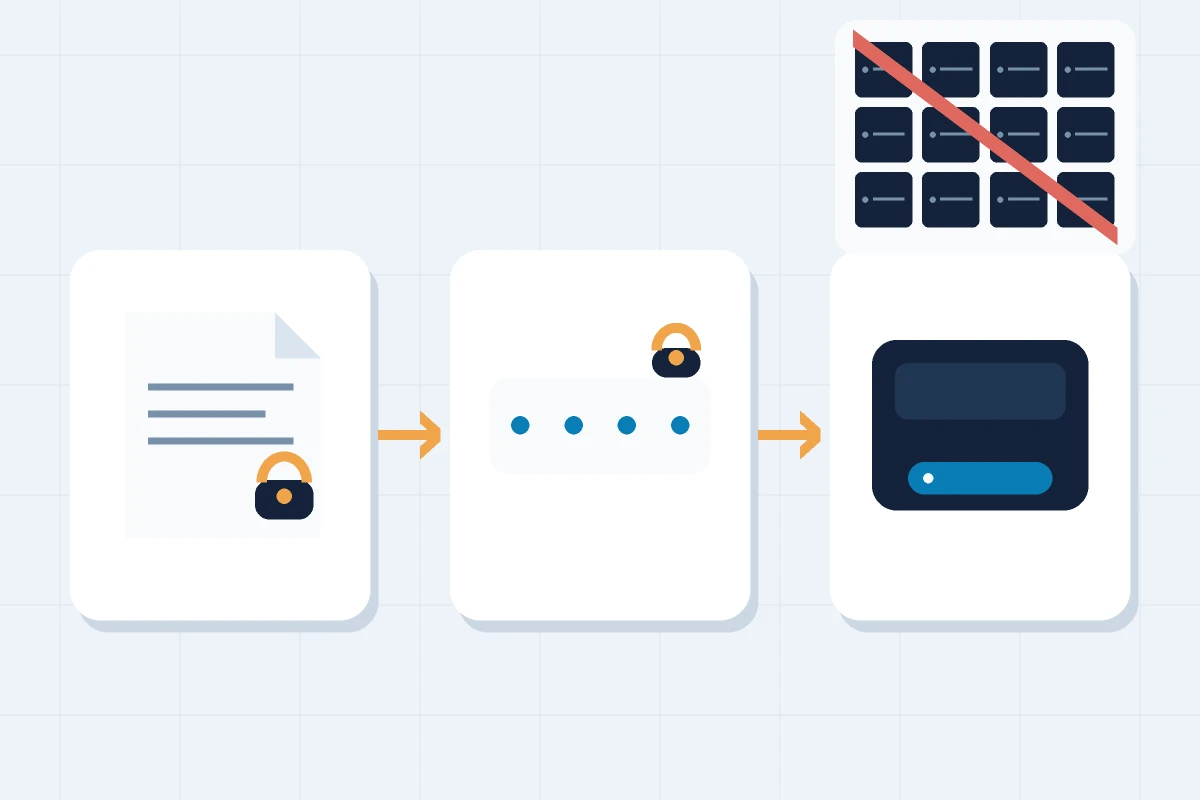
If you're looking for your Bitcoin Core seed phrase, here's the answer first: there isn't one. Bitcoin Core doesn't generate a seed phrase and never has. No version, old or current, shows you 12 or 24 English words during setup. There's no "write these words down" screen and no set of words that restores the wallet.
That catches most people out, because every other wallet works the other way round. MetaMask, Ledger, Trezor and almost anything made after 2014 treat the recovery phrase as the master backup. Bitcoin Core treats a file as the master backup: wallet.dat, and the password you set on it.
Knowing that changes what you go looking for. The hours people spend hunting for words that were never written are hours not spent looking for the file that was.
Why Bitcoin Core has no seed phrase
Bitcoin Core came first. It was released in 2009, and the idea of a mnemonic backup didn't exist yet — BIP-39, the standard that defines the 2,048-word list nearly every modern wallet uses, wasn't assigned until September 2013. By then Bitcoin Core already had a working wallet, and its developers chose not to adopt BIP-39 afterwards. That was a deliberate decision, not an oversight, and it has never been reversed.
So Bitcoin Core went its own way on key management. That approach has changed three times over the years, and which era your wallet comes from decides what recovery looks like.
Legacy wallets: independent keys and the stale-backup trap
In the original design, every private key is generated as its own random number. There's no mathematical relationship between them: key one tells you nothing about key two. They are separate random values, and they live in wallet.dat.
To avoid generating a key for every transaction, Bitcoin Core pre-generates a pool of them in advance. This is where a quiet danger sits, and it's worth stating plainly:
A backup of a legacy wallet only contains the keys that existed when you made it. Once the wallet works through its pool and generates new keys, your old backup no longer covers them. Nothing warns you. The file still opens, the balance still looks right on the machine you're using, and the gap only shows up years later when you restore the old copy somewhere else and coins are missing.
If you're restoring a legacy backup and the balance is lower than you expect, that's the first thing to consider before assuming theft. Check your old receiving addresses on a block explorer: if the coins are sitting at an address your restored wallet doesn't know about, this is the reason.
The harder consequence is the one that has no fix. If wallet.dat is gone and you never exported the individual private keys, those coins are unreachable. There's no seed, no phrase, no master key that regenerates independent random values. They existed in one place, and that place was the file.
HD wallets: a seed, but not a seed phrase
Bitcoin Core 0.13.0, released on 23 August 2016, introduced hierarchical deterministic key generation following BIP-32, with newly created wallets deriving keys along the path m/0'/0'/k'. In an HD wallet every key comes from one master seed, so in principle the seed alone regenerates everything the wallet ever produced.
Here's where people get their hopes up, and where they need lowering slightly. Bitcoin Core's HD seed isn't a seed phrase. It's a raw binary value stored inside wallet.dat. Bitcoin Core doesn't convert it into BIP-39 words, doesn't display it as English, and never prompts you to write anything down. It sits in the file as a hexadecimal string, invisible unless you go looking with console commands.
Which means the backup model didn't really change. The HD seed lives in wallet.dat, and if wallet.dat is lost the seed goes with it, unless you specifically exported it beforehand. Almost nobody did, because nothing in the interface ever suggested it.
Descriptor wallets: the current default
Current Bitcoin Core versions create descriptor wallets by default, and the retirement of the old format is finished rather than under way. Bitcoin Core 30.0, released on 10 October 2025, can no longer create or load a Berkeley DB legacy wallet at all. An old wallet.dat therefore has two routes: migrate it to the descriptor format with the migratewallet command, or open it in a release older than 30.0.
Copy the file before you migrate anything and work from the copy. On 5 January 2026 the Bitcoin Core project warned that in versions 30.0 and 30.1 a failed migration could delete every file in the wallet directory, unrelated wallets included, and asked people not to migrate until the fix was out. That fix shipped as 30.2 on 10 January 2026.
For recovery, none of this changes the answer. Descriptor wallets are still file-based, still stored in the wallet directory, and still produce no mnemonic phrase. If you have an old wallet.dat, migration is something you do after you can open the file: not a route into one you can't.
Can I extract the HD seed and use it like a seed phrase?
If you can still open the wallet, yes, you can extract it. And no, it won't do what you're hoping.
How you get at it depends on the version you're running. On a release older than 30.0, dumpwallet in the Debug Console writes the keys to a text file: the seed key carries an hdseed=1 marker, and the file header holds the extended private master key as an xprv string. On 30.0 and later that command no longer exists, and a wallet you have migrated shows the same material through listdescriptors true, which prints the descriptors with the private key inside them.
Neither form is a BIP-39 mnemonic. You can't type it into MetaMask, Ledger or Electrum and arrive at the same addresses: the derivation paths are incompatible and the encoding is different. It's a backup of your Bitcoin Core wallet, usable by Bitcoin Core.
To actually move to another wallet, send the coins to an address in the new wallet. That was already the better of the two options, and since 30.0 it's the practical one: dumpprivkey and importprivkey went out with the rest of the legacy wallet code, so exporting key by key now means keeping an old release around as well.
The sethdseed confusion
Bitcoin Core 0.17 added a sethdseed command, and the name has convinced a lot of people it creates a seed-phrase backup. It doesn't. Its documentation described the argument as "the WIF private key to use as the new HD seed" — a raw key, not a mnemonic — and it only ever worked on legacy wallets. Bitcoin Core 30.0 removed it outright, along with dumpwallet, dumpprivkey, importprivkey and the other legacy-only commands, so on current software it isn't there to run.
It was a tool for advanced users who wanted control over their key derivation. Either way it doesn't change the recovery model: wallet.dat plus the password is still everything.
What this actually means for your recovery
Strip away the detail and every Bitcoin Core case comes down to two questions.
Do you have the file? If yes, and you have forgotten the password, that's a solvable problem, often a very solvable one. Password recovery tests candidates against the encrypted file, and everything you remember about your own habits shrinks the search. Our Bitcoin Core password recovery guide walks through building a guess list and running the tools, and the wallet.dat password recovery guide covers the file format across the whole Bitcoin family.
If you don't have the file, the question becomes whether it still exists somewhere: an old drive, a backup you forgot, a cloud sync, a machine in a cupboard. That's a data-recovery problem rather than a crypto problem, and it's covered in our guide to safe handling of old wallets and drives.
If the file is genuinely gone and no keys were ever exported, the honest answer is that the coins can't be recovered: not by us, not by anyone. We would rather say that than let you spend months on something that can't work.
Not sure what you're looking at? Our guide to recognising a wallet file helps you identify what you have found before you touch it.
FAQ: Bitcoin Core and seed phrases
Does any version of Bitcoin Core support BIP-39 seed phrases?
No. No release of Bitcoin Core has ever generated or accepted a BIP-39 mnemonic. The developers decided against adopting the standard after it appeared in 2013, and that hasn't changed. Any tool claiming to show you "your Bitcoin Core seed phrase" is either describing a different wallet or isn't trustworthy.
I found 12 words written on a piece of paper. Could they be from Bitcoin Core?
No. If those words belong to a wallet, it's a different one: Electrum, MetaMask, a hardware wallet, or a mobile wallet you used around the same time. It's worth working out which, because that wallet may well be recoverable. See our comparison of seed standards for how to tell the formats apart.
Can I import a BIP-39 seed phrase into Bitcoin Core?
Not directly. Bitcoin Core can't take a mnemonic as input. You would restore the phrase in a wallet that does support BIP-39 and, if you specifically wanted the coins in Bitcoin Core, send them across or import the derived private keys.
I created my wallet in 2012. Is it legacy or HD?
Legacy. HD key generation only arrived with Bitcoin Core 0.13.0 in August 2016, and only for wallets created after that. A 2012 wallet holds independently generated keys, which makes the stale-backup problem above especially relevant to it.
What happens if I lose wallet.dat and have no seed phrase?
If no copy of the file survives anywhere and you never exported the private keys, the coins are permanently inaccessible. There's no fallback, because there was never a phrase to fall back on. This is the one Bitcoin Core scenario with no route back.
Can Crypto Recovers help without a seed phrase?
That's the normal Bitcoin Core case: yes, provided the wallet file exists. We work on forgotten passwords for wallet.dat, on damaged and partially readable files, and on finding files that were deleted from a drive. What we can't do is reconstruct keys from nothing. The assessment is free and tells you honestly which situation you're in.